

BRCA Gene Testing: What It Means for Your Treatment
A BRCA gene testing result can feel like it changes everything — but understanding what it actually means is the first step toward making confident, informed decisions about your health. According to the National Cancer Institute, inherited harmful variants in BRCA1 and BRCA2 are responsible for a meaningful share of hereditary breast and ovarian cancers. Whether you’re considering testing because of a family history of cancer or you’ve already been diagnosed and your doctor has recommended it, this guide breaks down what BRCA testing involves, how results shape your treatment path, and what to expect if you’re exploring options in India.
Katika Nyumba ya Huduma ya Afya (HoH), we regularly guide patients through genetic testing and the treatment decisions that follow — connecting them with experienced gynecologic oncologists and geneticists at India’s leading cancer centers.
What Is BRCA Gene Testing?
BRCA1 and BRCA2 are genes that normally help repair damaged DNA and suppress tumor growth. When one of these genes carries a harmful mutation, that protective function is disrupted — significantly raising the lifetime risk of certain cancers, most notably breast and ovarian cancer, and to a lesser extent pancreatic and prostate cancer.
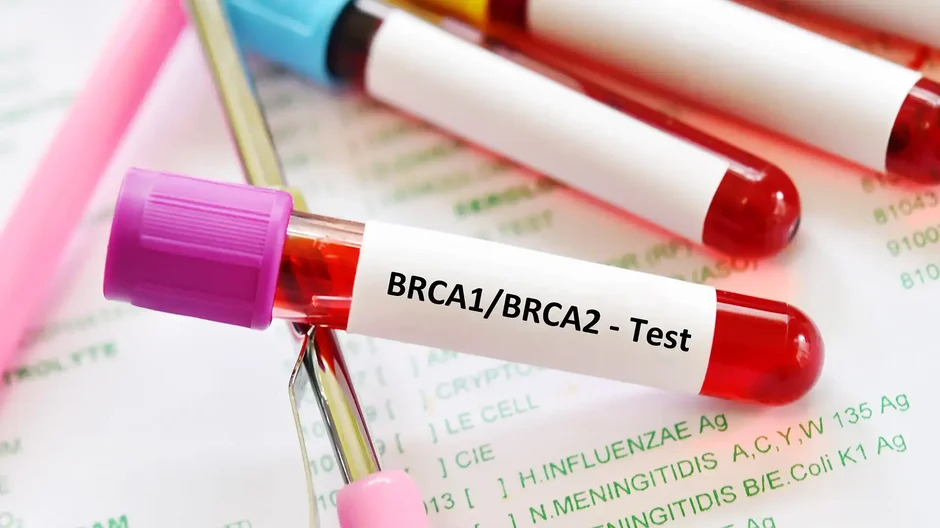
BRCA testing is a genetic test — usually done via a blood sample, though some labs use a saliva or cheek swab — that checks whether you carry one of these mutations. It doesn’t diagnose cancer. Instead, it tells you and your doctor about your underlying genetic risk, which shapes decisions around screening, prevention, and, if you’re already diagnosed, treatment strategy.
Who Should Consider BRCA Gene Testing?
Genetic counselors and oncologists typically recommend BRCA testing for individuals who have:
- Been diagnosed with breast cancer before age 45
- Ovarian cancer diagnosed at any age
- Triple-negative breast cancer diagnosed before age 60
- Two or more close relatives (parent, sibling, child) with breast, ovarian, or pancreatic cancer
- A known BRCA mutation already identified in a family member
- Male breast cancer in the family
- Ashkenazi Jewish ancestry combined with a personal or family cancer history
If any of these apply to you, a conversation with a genetic counselor or oncologist about testing is worth having — even if you haven’t been diagnosed with cancer yourself.
Understanding Your BRCA Gene Test Results
Positive result: You carry a harmful mutation in BRCA1 or BRCA2. This doesn’t mean you have cancer or definitely will — but your lifetime risk is substantially elevated. According to American Cancer Society data, women with a BRCA mutation face up to a 45–85% lifetime risk of breast cancer and a 15–46% lifetime risk of ovarian cancer, compared to much lower risks in the general population.
Negative result: No harmful mutation was found in the genes tested. If there’s a known mutation elsewhere in your family, a “true negative” (meaning you didn’t inherit the specific family mutation) is reassuring. However, a negative result doesn’t eliminate all cancer risk — it simply rules out this particular genetic cause.
Variant of uncertain significance (VUS): Sometimes a genetic change is found, but it isn’t yet clear whether it’s harmful or harmless. This result requires ongoing monitoring and re-evaluation as research evolves, alongside guidance from a genetic counselor.
How BRCA Results Shape Your Treatment
This is where BRCA Gene testing becomes more than just a risk indicator — for many patients, it directly informs treatment strategy.
If You’ve Already Been Diagnosed With Cancer
- Targeted therapy eligibility — Patients with a BRCA mutation may be eligible for PARP inhibitors, a class of targeted drugs that work especially well against BRCA-mutated tumors by exploiting their impaired DNA-repair ability.
- Chemotherapy sensitivity — BRCA-mutated tumors often respond differently to platinum-based chemotherapy, which oncologists factor into treatment planning.
- Surgical decision-making — Knowing your BRCA status can influence choices between lumpectomy and mastectomy, and whether risk-reducing surgery on the other breast or ovaries is appropriate.
If You Test Positive Without a Cancer Diagnosis
- Enhanced screening — Earlier and more frequent mammograms, breast MRIs, and pelvic exams/ultrasounds
- Risk-reducing (prophylactic) surgery — Some patients choose preventive mastectomy or removal of the ovaries and fallopian tubes (salpingo-oophorectomy) once they’ve completed childbearing
- Chemoprevention — Certain medications can lower risk for high-risk individuals
- Family counseling — Since BRCA mutations are inherited, each child of a carrier has a 50% chance of inheriting the same mutation, making family testing and counseling an important next step
What Happens After Testing? The Role of Genetic Counseling
A BRCA result positive or negative is rarely something to interpret alone. Genetic counseling before and after testing helps you:
- Understand what the result actually means for you and your family
- Weigh the pros and cons of different risk-management options
- Make decisions about surgery, surveillance, or family planning with full information
- Communicate results to family members who may also want to be tested
At HoH, our partner hospitals include certified genetic counselors as part of the testing and treatment journey — not an optional add-on.
Why International Patients Choose India for BRCA Gene Testing & Follow-Up Care
- Significant cost savings compared to Western countries, without compromising on lab accreditation (NABL/CAP-certified facilities)
- Fast turnaround times and access to advanced NGS (next-generation sequencing) technology
- Seamless connection to treatment — if results indicate a need for further care, India’s leading oncology centers and partner hospitals offer everything from targeted therapy to risk-reducing surgery under one coordinated plan
- Experienced multidisciplinary teams — oncologists, genetic counselors, and surgeons working together on your case
How HoH Supports Your BRCA Gene Testing Journey
- ✅ Free consultation to understand your risk profile and testing needs
- ✅ Lab and hospital matching based on your specific requirements
- ✅ Transparent, upfront cost estimates — no hidden charges (see our treatment cost guide for a broader breakdown)
- ✅ Coordination with genetic counselors for pre- and post-test guidance
- ✅ Seamless transition to treatment if results indicate further care is needed, with curated treatment packages to suit different needs
- ✅ End-to-end medical tourism support — visa, travel, and accommodation assistance
With over 10+ years of experience and 1,200+ patients served, HoH helps patients navigate genetic testing and cancer care with clarity, not confusion.
Frequently Asked Questions
Is BRCA testing only for women?
No. Men can also carry BRCA mutations and pass them on to children. Men with BRCA mutations have an increased risk of breast, prostate, and pancreatic cancer, so testing may be recommended for men with a relevant family history too.
Does a positive BRCA result mean I will definitely get cancer?
No. It means your risk is significantly elevated compared to the general population, not that cancer is certain. Many people with a positive result never develop cancer, especially with proactive screening and risk management.
How is BRCA testing different from a CA-125 test?
BRCA testing looks at your genetic risk of developing cancer in the future, while a CA-125 test measures a protein in the blood that can be elevated in existing ovarian cancer or monitored during treatment. They serve different purposes — genetic risk assessment versus disease monitoring — and are sometimes used together as part of a complete gynecologic cancer risk picture.
Can I get BRCA testing without a doctor’s referral?
Many labs in India offer direct-to-consumer testing, but it’s strongly recommended to go through a genetic counselor or oncologist so your results are interpreted correctly and followed up appropriately.
If I test positive, do I have to have surgery?
No. Risk-reducing surgery is one option, not a requirement. Many patients choose enhanced surveillance instead, especially earlier in life, and revisit the decision as circumstances change.
How long does it take to get BRCA test results?
Typically 1–3 weeks, depending on the lab and test complexity, followed by a genetic counseling session to review the findings.
Start Your Genetic Testing Journey With HoH
Whether you’re exploring BRCA testing because of family history or navigating next steps after a diagnosis, Home of Healthcare is here to connect you with the right specialists and support — every step of the way.
Pata Ushauri wa Bure and let our team guide you through testing, results, and treatment planning with India’s leading oncology specialists.







 English
 Swahili
 Arabic